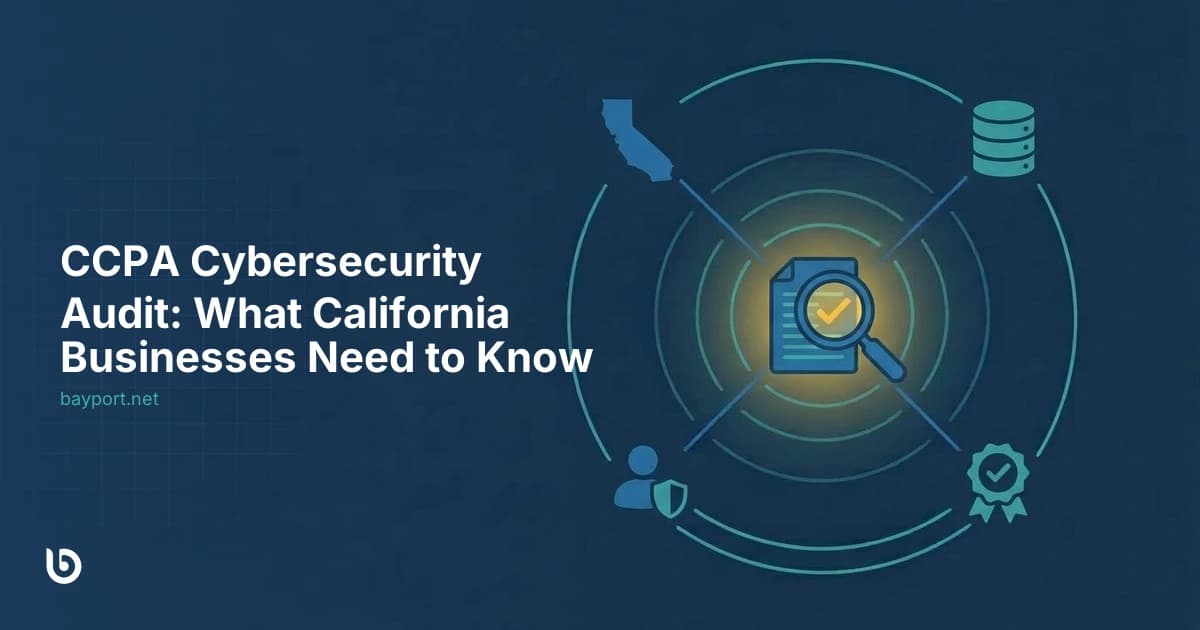
CCPA Cybersecurity Audits: What Bay Area Businesses Need to Know
California is raising the bar on cybersecurity requirements. Updated privacy regulations are introducing new expectations for how businesses protect personal information — including documented security controls, risk assessments, and for some organizations, formal cybersecurity audits.
If you run a business in the Bay Area that collects customer data, here's what you need to know.
What Changed
The California Privacy Rights Act (CPRA) — which amended the original CCPA — authorized the California Privacy Protection Agency (CPPA) to develop regulations around cybersecurity audits and risk assessments. These regulations are being finalized and phased in through 2030.
The key shift: California is moving from a reactive model (respond after a breach) to a proactive model (demonstrate that you have reasonable security measures in place before something goes wrong).
Who Is Affected
The audit requirements are expected to apply to businesses that process personal information in ways that present significant risk to consumer privacy and security. This includes organizations processing large volumes of personal data, handling sensitive categories of information, or using automated decision-making technologies.
The thresholds are being phased in — larger organizations will be subject to requirements first, with smaller businesses following in later phases. However, the underlying expectation of "reasonable security" applies to all businesses under CCPA, regardless of size.
What the Audits Require
While final rules are still being developed, the audit framework is expected to cover:
- Documented security controls proportional to the sensitivity of data you collect and process
- Regular risk assessments identifying threats to personal information
- Multi-factor authentication on systems that access personal data
- Access controls and least-privilege policies
- Written incident response procedures
- Evidence that security measures are implemented and maintained
The emphasis is on documentation and evidence. It's not enough to have good security practices — you need to be able to prove it to an auditor.
The Timeline
The audit requirements are being phased in over several years. Mandatory cybersecurity audit certifications for qualifying businesses are expected to begin between 2028 and 2030, depending on organization size and risk profile.
However, the "reasonable security" standard under CCPA is already enforceable. The California Attorney General has brought actions against companies that suffered data breaches and could not demonstrate adequate security measures. Waiting until audits are mandatory is risky.
The Insurance Parallel
While California tightens regulatory requirements, cyber insurers are tightening underwriting requirements in parallel. The same controls California will expect in an audit — MFA, EDR, access controls, incident response plans — are already required by most carriers.
This creates an opportunity: investing in these controls now satisfies both regulatory expectations and insurance requirements simultaneously.
What to Do Now
Even if your business won't be subject to the first phase of formal audit requirements, there are practical steps you should take today:
- Inventory the personal information you collect and where it's stored
- Implement baseline controls: MFA, EDR, encrypted backups, patch management
- Document your security policies and procedures in writing
- Conduct a risk assessment to identify gaps in your current posture
- Start collecting evidence of your security measures — auditors and insurers will want to see it
A managed security service designed to support compliance readiness can handle most of this for you — implementing controls, generating documentation, and producing quarterly evidence packages that demonstrate your security posture to both regulators and insurers.